
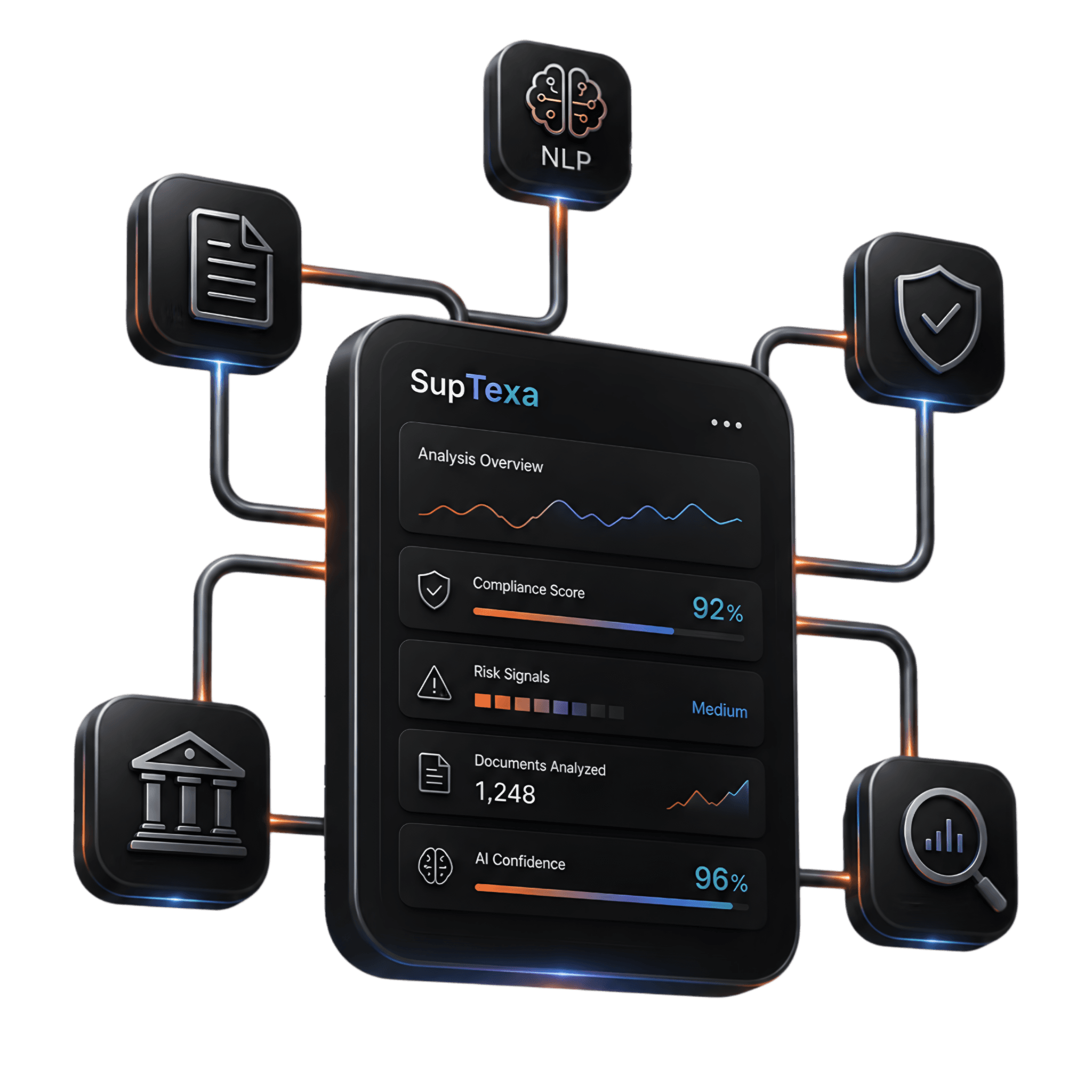
Turn documents into supervisory insights in 1 minute with SupTEXA
Step 1
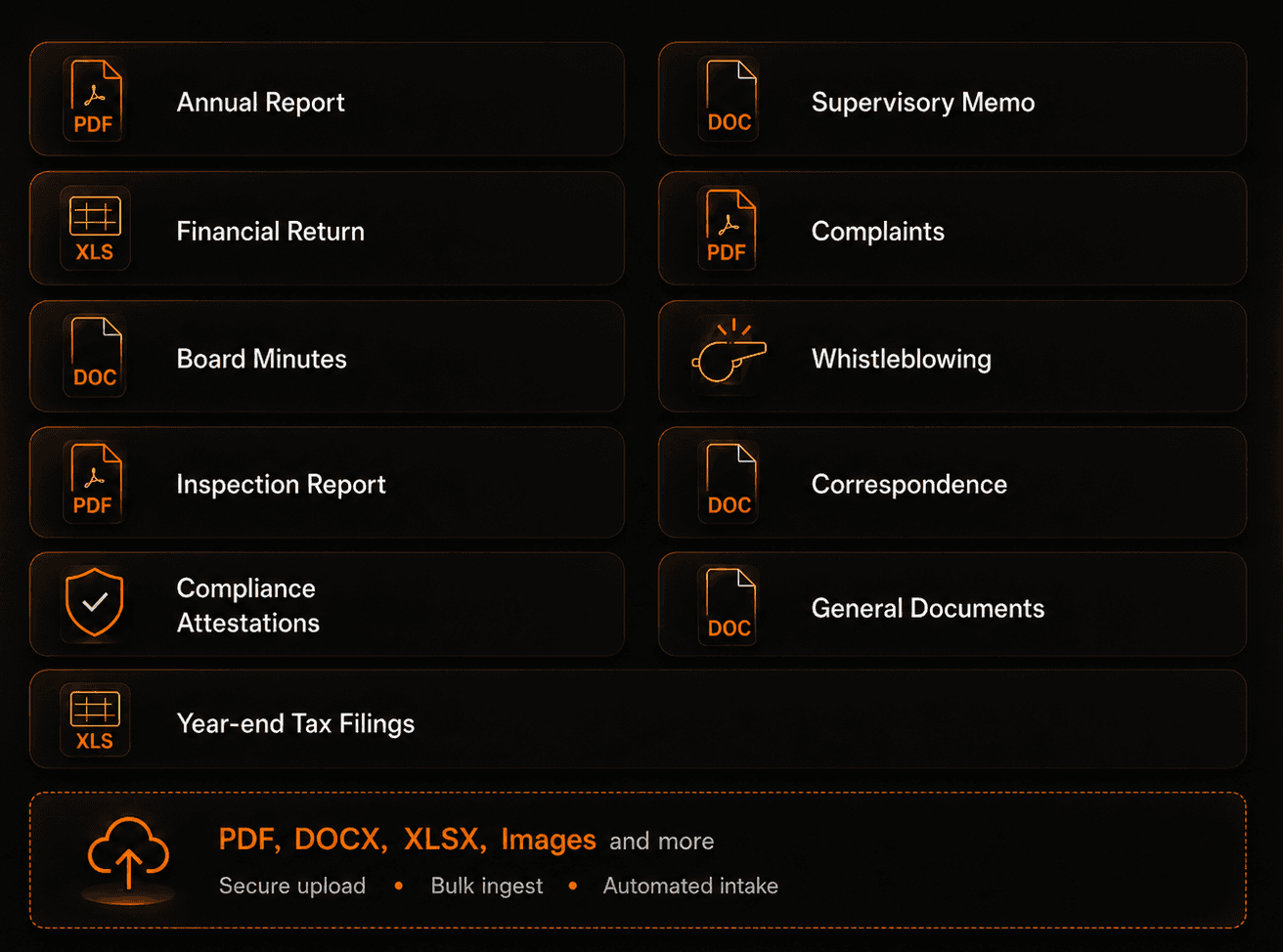
Collect Documents
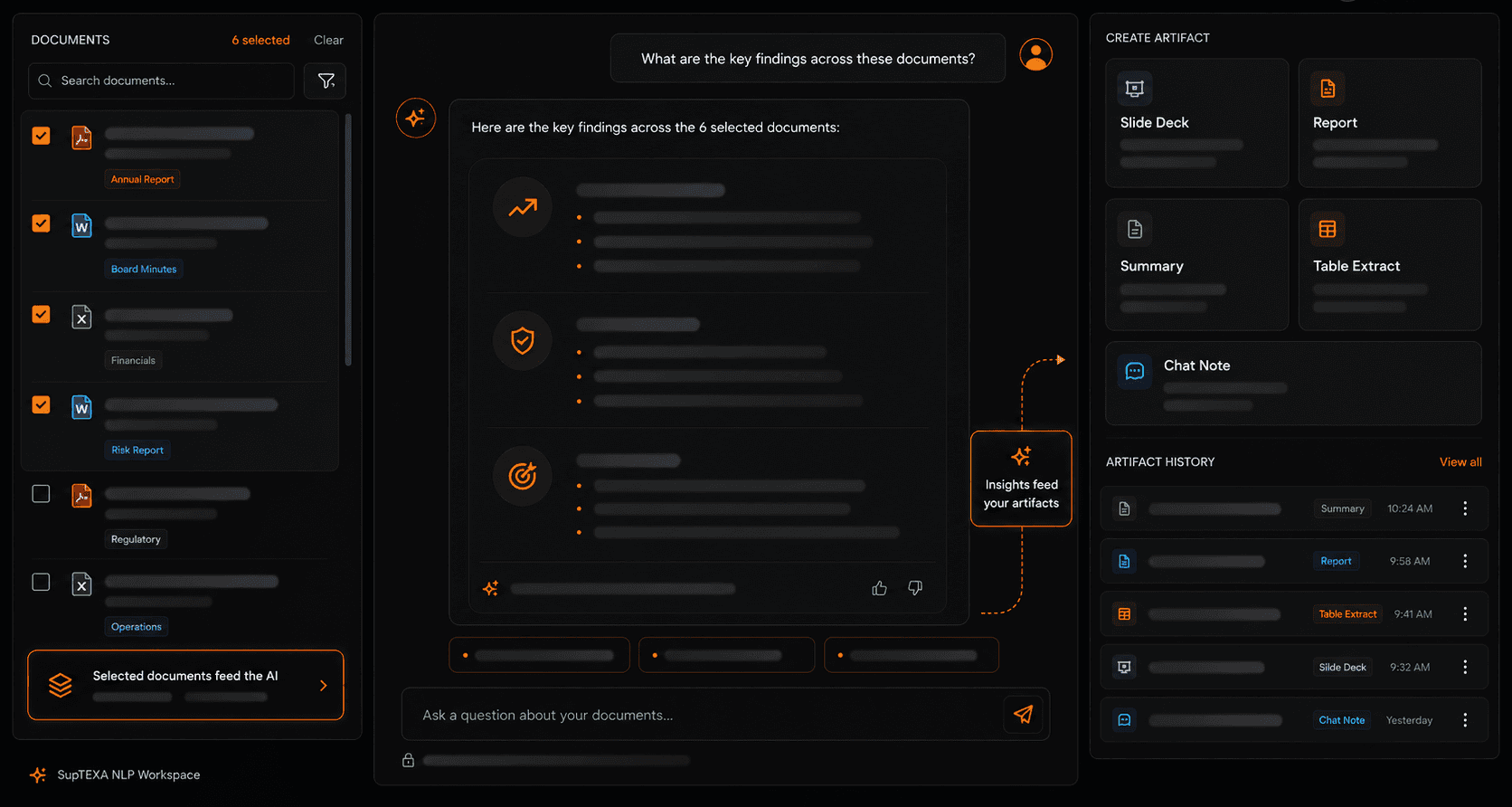
Collect regular and on-demand reports, complaints, board minutes, policies, inspection files and other documents from Financial institutions.
Step 2
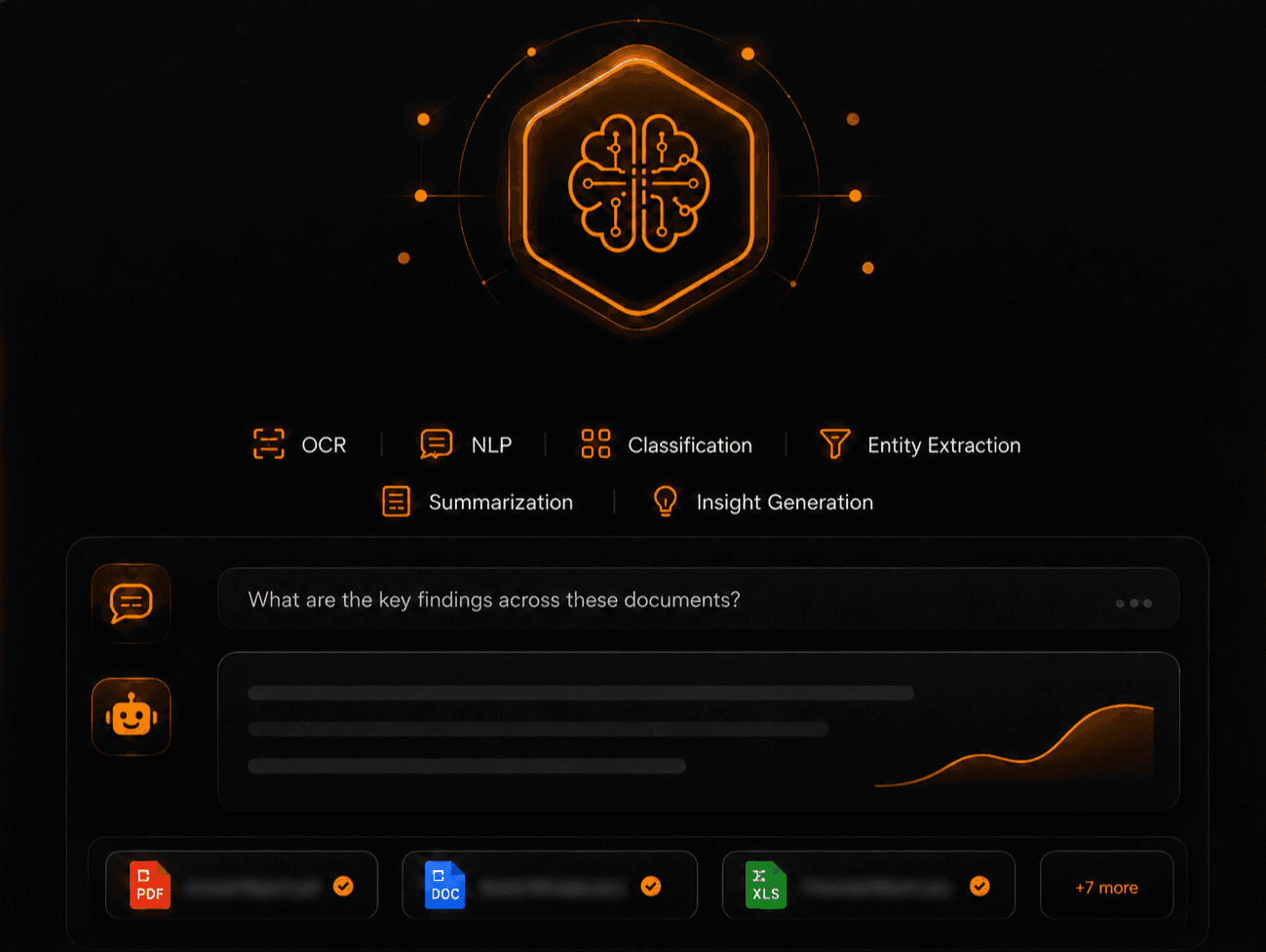
Process with NLP
Extract, classify, summarize and generate insights for entities, decisions, findings, recommendations, deadlines, risk terms, compliance references and relevant insights.
Step 3
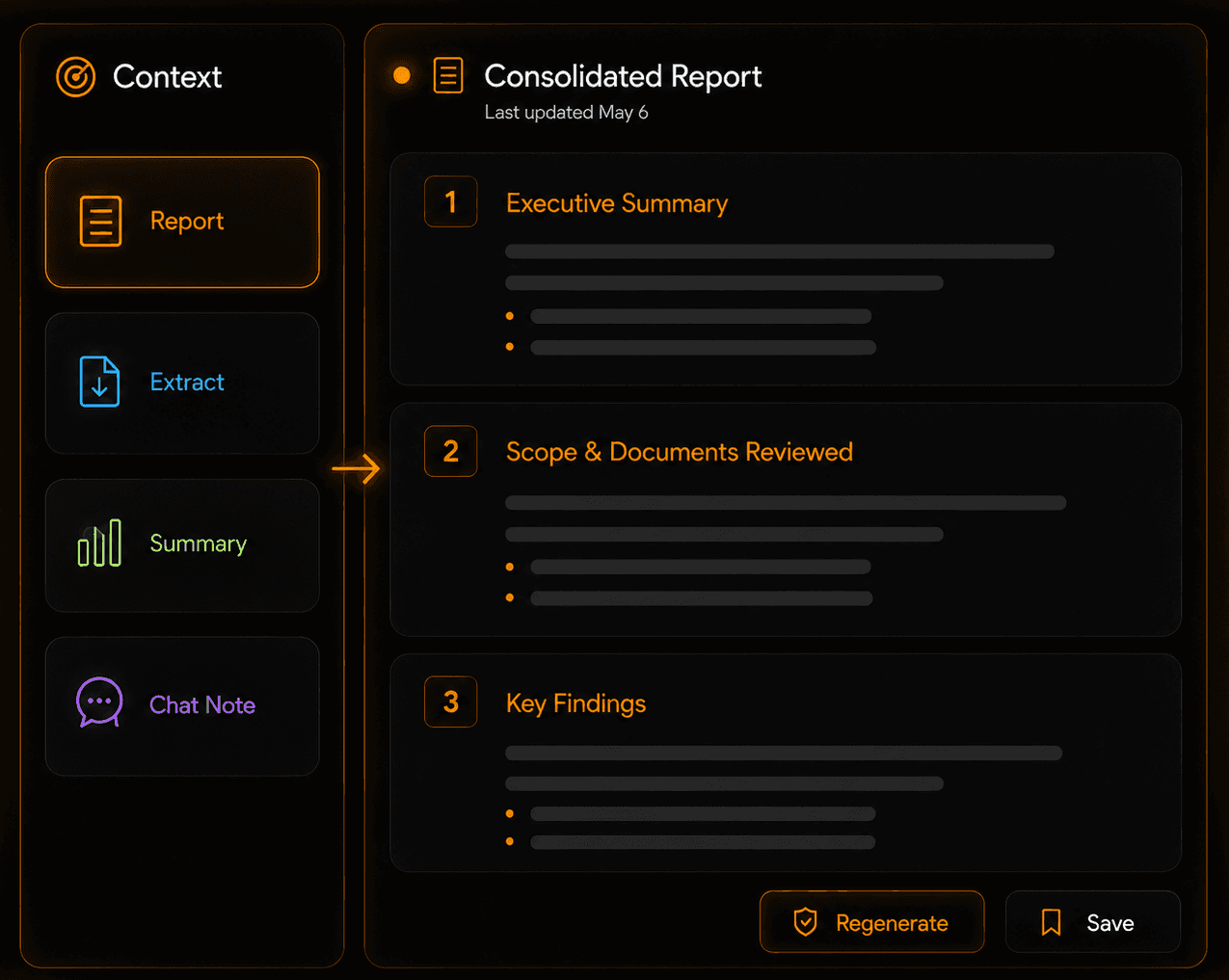
Create Consolidated Textual Reports
Generate a structured supervisory reports, including: Executive Summary, Key Findings, Risk Assessment, Compliance & Recommendations.
Step 4
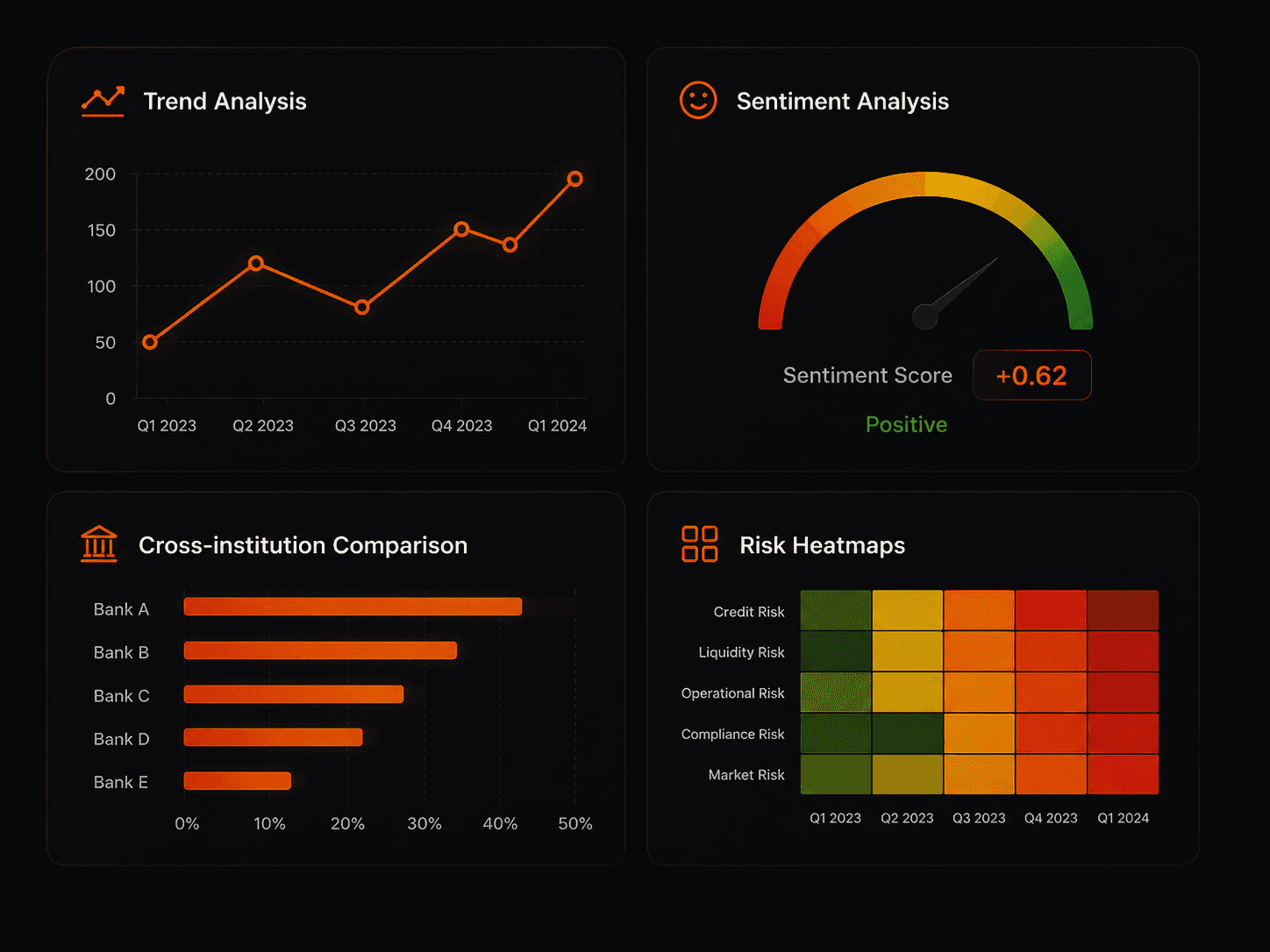
Turn Reports into BI Dashboards
Turn processed document data into supervisory BI dashboards with Trends, Sentiment analysis, Risk heatmaps, Cross-institution comparison and more.
Key Features
Topic Classification
Discovers what every document is about without reading it
Contextual Semantic Search
Search across all documents by meaning, not just keyword
Named Entity Extraction
Automatically identifies who, what, where and how much
PII Masking & Privacy
Protects sensitive identities before any analysis runs
Sentiment & Tone Analysis
Detects distress, evasion, or negativity in narrative language
Risk Detection & Alerting
Flags compliance failures, patterns, and anomalous language

Best for:
Financial condition review
SupTEXA analyses annual reports, audited financial statements and management letters to extract financial-risk language, auditor concerns, liquidity and capital references, and material changes. The result is an early warning note for off-site supervision.
Market conduct monitoring
Complaints and correspondence are classified to detect sentiment, repeated issues, and escalation signals, producing a conduct-risk signal.
Governance assessment
Board minutes and policies are reviewed to identify key decisions, unresolved actions, and accountability gaps, producing a governance-risk profile.
Inspection follow-up
Inspection reports are processed to identify findings, deadlines and overdue actions.
Cross-institution comparison
Similar documents are compared to reveal shared risk themes and produce a peer risk heatmap.
Request a Workshop Recording
AI for Supervisory Document & Text Analysis
Turning Regulatory Documents into Actionable Intelligence
FAQ
What can SupTEXA do with supervisory documents?
We provide full-cycle support, including system updates, technical maintenance and ongoing consulting. Our training programs cover end-user onboarding, administrator certification and custom learning modules led by certified experts and tailored to your team’s needs.
